Posts

Life, books, and lack of luck - An update

We haven’t written a blog post in a while, but I’d like to give you all some updates about us and our work. We were quite occupied with life lately, and that distracted us from writing and even more from marketing our books, which is clearly shows on our sales reports. :D But good things are happening so I guess once in a while it’s fine that we live more in the real world than in our fictional ones.  The first good news is that now we are officially married! It was a very sudden decision and we made everything work within a month. We had a very little ceremony in the office with our parents, Dar’s sisters and with two of our friends and their partners being best man and maid of honor, but my mother’s conviction is that one of the secrets of long marriage is to have a very little wedding. I don’t think that’s true, but we are not sad that we didn’t have a big celebration with 100+ people there.  We also found our new home! We live in the heart of Budapest in a little flat, and...
Destiny is all! - The origins of the chosen one and fated mates

Image
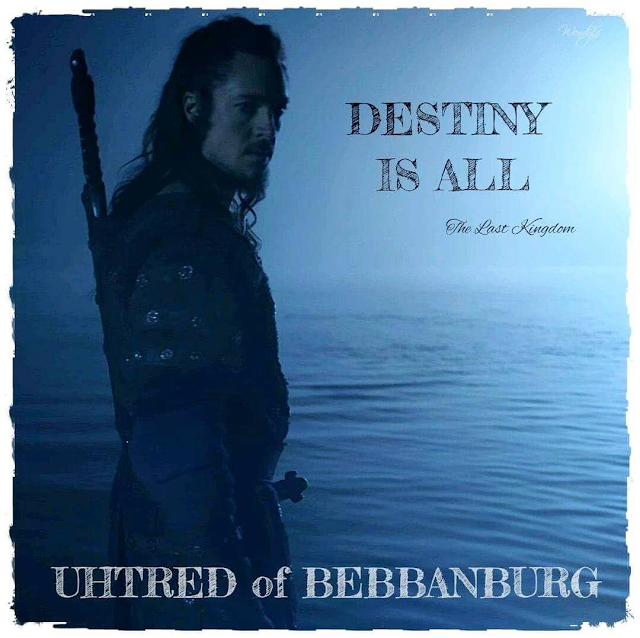
  We recently watched The Last Kingdom series on Netflix, where Uhtred (son of Uhtred)’s catchphrase „Destiny is all” gave us the idea of today’s blogpost. I know everyone says the books are better, but I rarely (ok, I admit it, never) read historical fiction, so we came across the Netflix series first.  Let’s talk about destiny!  It’s a concept as old as humankind itself, and many still believe in it. It has its own philosophical concept, fatalism, which basically means that no matter what you do, you cannot change yours or someone else’s fate. Fate and destiny, although people may use it as interchangeable terms are not the same thing. Destiny—coming from the word destination—is the result, the purpose of one’s life, the future while fate is the present, the moment every past decisions led to. Both of them are inevitable no matter what you do.  But who decides what is our fate and destiny? Our ancestors believed that this is part of some kind of divine plan. In Ind...

Beware of the fish... and the chicken... - New Year's Eve customs

Image
First of all, happy new year to everyone reading this post! I hope you had enough booze, partying, and good wishes for 2022. Last year was an interesting one, with great and awful things happening. I would gladly avoid the latter in this new one, and keep only the good things going forward. We have a lot of plans I want to share with you at the end of the post, but first let’s get to the topic I brought you today! We have a lot of customs and beliefs surrounding the first day of the new year. I’m not saying I believe them, but for some reason I still try to follow these every year. I’m not sure if because everyone in my family does so, or if deep down I lean towards believeing, but they won’t do any harm, and at least there’s the illusion of a little control over what’s about to come. So let me share with you a few of the customs and beliefes we have for this day! Feel free to add yours in the comments, I’m really curious about them. 1. What you do on the first day shall determine your...

Faeries done right - Mad kings and colonization

Image
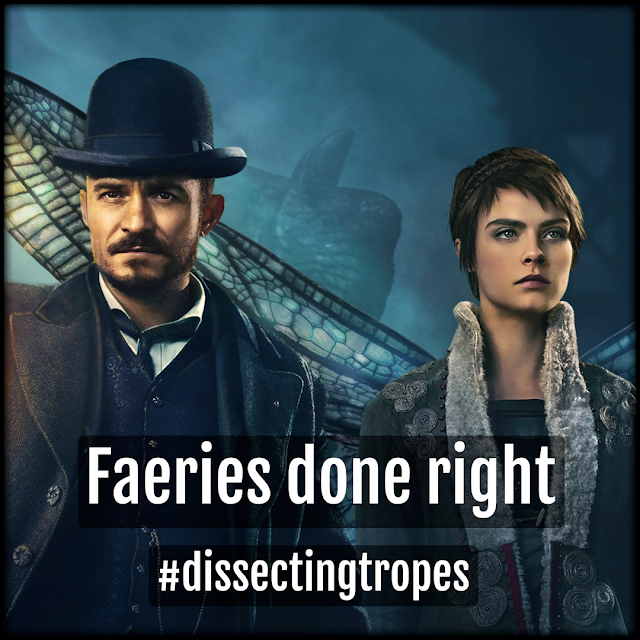
Hey there, traveler! It’s Darr here, with a crescendo to our fairy extravaganza. We’ve already mentioned some popular media featuring fae of all kind, but as a last note, I thought we should look at a couple of the ones we like best. Be aware, this one is super spoilery, so if you haven’t seen any of the series mentioned in the paragraph titles, proceed at your own risk! Ready? Let’s go! I. Mad Sweeney (American Gods) This one is special to me because of how perfectly it portrays the demystification of Irish mythology. Mad Sweeney is a character in Neil Gaiman’s American Gods , introduced as a leprechaun, a celtic fae creature similar to a dwarf associated with gold and luck. However, there are immediately a few bits somehow amiss. First, Sweeney is tall, like, really tall. Second, his magical pulling-coins-out-of-thin-air power is later revealed to work with basically anything he touches and stashes away in “the hoard of the sun”, something way cooler than a leprechaun can usually acc...

The Fairy Courts - Shadow and light

Image
We are nearing the end of the fairy topic, so to end on a high note, let’s look at a really popular trope we haven’t touched until now: the fairy courts, the kings, queens and nobles of fairyland. People love the idea of having fairy royalties, a good and a bad court and – like everything – it has mythological origins. Now, the last few tropes almost always had some pseudohistory behind the myths, but while researching the courts, I couldn’t find anything similar. So let’s just stick with folklore for now. The fairies of today’s Great Britain are classified in many different ways, but the one leaking into popular culture is the Scottish Seelie and Unseelie courts. They are so popular, in fact, that they even have their own TV tropes page. The Seelie court is associated with light, beauty and summer, while the Unseelie court is dark, it’s inhabitants are often ugly and goblin-like, and belongs to the season of winter. In most modern literary works the difference is usually aesthetic, or...

Fairy Oddities - The Changelings

Image
Today's topic isn't specifically a type of fairy (or a myth circle about fairies), rather a phenomenon linking us to this blog's origins (about myths founded on rare or misunderstood medical conditions) while still remaining in the court of these many-faced spirits. The fairies definitely have a bright side, as cute little winged creatures, or oversexualized sexy bad guys (I’m looking at you SJM), but there are some very dark tales and legends surrounding them. So today, let me introduce to you the strange occurence that was the Changelings. In Europe, people believed that fairies could (and most definitely would) kidnap babies from their cradle and replace them with either a young of their own, or a fairly old fairy to live his last days with a caring family. This fairy baby is the changeling. But how could someone think that their child was in fact a changeling? In old times, when fitting in with society was literally a matter of life and death, anything strange about a c...

Origin of the fairy trope III. - Ireland and the Tuatha

Image
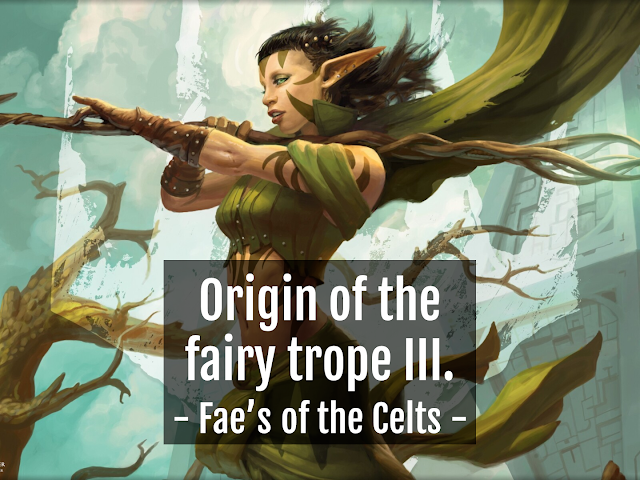
To be honest, I was intimated by the amount of raw lore surrounding today’s topic, but it’s pretty much unavoidable when speaking about fairies. From Shakespear and Tolkien to Neil Gaiman and Sarah J. Maas, writers love drawing on the mysterious Celts (especially their Irish variant) when portraying fae creatures, because this was basically the culture that made them famous. It’s the first thing people think about hearing the word “fairy”, so let us not tally longer and plunge into this monster of a trope. In Irish-Celtic mythology, the Tuath Dé, or Tuatha dé Danann (“the tribe of the goddess Danu” or “the tribe of the gods”) are a supernatural race of people, making up most of the region’s pre-christian pantheon, filling every must-have god role  (like we talked about in here ). As belief holds, they dwelled in the Otherworld, a plane specifically for supernatural creatures accessible through ancient passage tombs (a type of underground burial mound with a narrow, mostly stone p...

Caravan of Fire cover reveal - The journey continues

Image
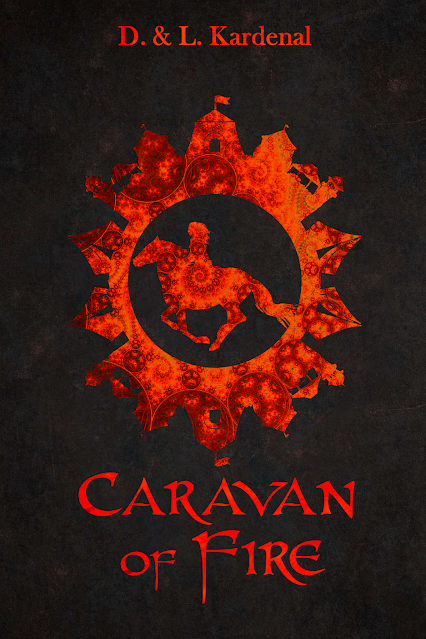
 I know, I know, I promised more fairies but… but… It’s here!  Our newletter subscribers already saw the cover and the blurb of Caravan of Fire, the second book in the Spirits of Seiran series. If you want to get the freshest news before anyone else, make sure to check out the subscription formula on the left 😉 We send a newsletter every month with the latest news about our WIPs, what happened on the blog, and some group promotions where you can get a lot of free short stories, excerpts and more. Yes, this was an advertisement. With our second book, creating the cover wasn’t as big of a journey, as it was with Shackles of the Storm. If you’re interested in the complete story about us creating the design theme, you can read about it here .  We saw a video somewhere, made by a really successful author about how she sold a lot of books. One tip was keeping the cover similar in a series, so people might recognize that as a brand. It was one of those advice that aren’t comple...

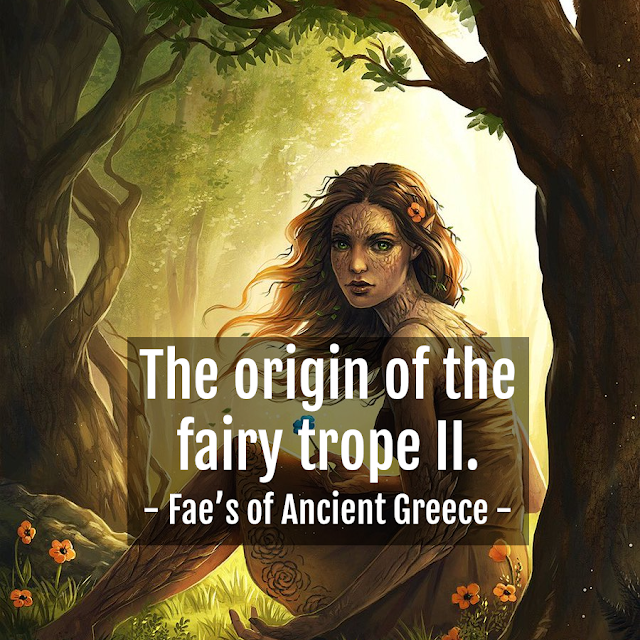
Origin of the Fairy Trope II. - Greece and the Nymphs

Image
The journey into one of the most important recent tropes continues with some mediterranean islands we now call Greece, and their version of the fairies: the Nymphs. As I did my research on the topic, I already came to some conclusions about these ancient and diverse creatures, so I plan a wrap-up post at the end of this series.  Although nymphs were only associated with fairies in the medieval times and onward, when classical literature and mythology became fashionable again, I think they are at least closly related. So even if greek nymphs seems a side track, they’re worth a post, so here we go! In ancient greek folklore the nymphs were minor nature deities and exclusively female – unlike fairies of other cultures and later times where they could be both male and female. They were described as beautiful and fair creatures, even the world nymph’s primary meaning is „young women” and „bride”. Every nypmh was bound to a special place, like a tree, a spring or a mountain, but honestly...

The origin of the fairy trope I. - Persia and the Peris

Image
After a long slumber – longer than I expected – I’d like to continue our blog with interesting topics that aren’t closely related to publishing or our book. There are many more myths and creatures out there we haven’t touched yet buta re worth exploring, so I’ll take this opportunity to start a new series with one of the most popular creatures – fairies and other fae folk. It’s quite a chonky topic, something that’ll give us several posts’ worth of material (one reason I haven’t touched on fairies before), but it’s just as interesting! Fairies don’t have a single origin, but are rather a collection of folk beliefs from different sources. In pagan traditions they are minor deities, spirits of the dead, spirits of nature or a race predating humankind. All of these can be seen in myths and in literature also, so in these blogposts I’ll go through the different cultures where fairies appear and try to find a literary piece where they used that interpretation of these diverse creatures. I r...

If at first you don't succeed - Persistence is the way to glory

Image
  As the summer is going by, we had a holiday to relax after all the excitement of publishing our debut novel. As a side-effect (or more like collateral damage), this blog has sunken into a slumber, but we’re set on reviving it! If you want to know more about certain topics related to mythology, legends and different medical conditions feel free to contact us! We already have a few bits and pieces but always need more. Until then I’d like to share our experience with being published authors for one and a half months. My feelings are mixed. I think I was waiting for something big, something life-changing, but nothing happened really. I joined a discord server lately for indie authors who are published or close to publishing, and they told me, that although we are stressed on the day of the debut, nothing will happen and they were right. They also told me to be patient, patience and persistence is the key to success in this industry and from our current position, I guess they are rig...

A tale of self-publishing - Launch Recap

Image
The day has finally come! We were waiting for this for a while now, but time flows fast during this pandemic, so it’s finally here. Our debut novel Shackles of the Storm is launching today at every major retailer!  We wanted to make this day special, but because it’s our first book, we had no idea what to expect. Publishing a book is a long journey with a lot of learning and gaining experience, especially for a self-published author. When we started to write our book baby we had never expected that one day we will publish it. This story started as a coping mechanism to our long-distance relationship and because we wanted to create something for ourselves, a whole world just for us. But when we got close to the last chapters we realized that it will really be a book, and it could be published should we want that to happen. So we dived deep into the world of publishing, the how-to videos, mistakes to avoid, and the nerve-wracking waiting period before our first betas gave their judgm...

Lost worlds - Our take on the trope

Image
  Some of you may have wondered what good is looking at old myths and legends – the answer is always inspiration, of course. And to lead by example, here’s how lost civilization stories inspired us. We may investigate more mysterious places and such later on because it’s an inexhaustible source for posts and inspiration, but for now, exciting times are ahead of us. First, let me remind you all, that our debut novel, Shackles of the Storm is currently on pre-order and coming on the 13th of June. If you are interested, you can buy the ebook at every major retailer, or go big and get a paperback copy from Amazon or IngramSpark. It took an enormous amount of work to create, with still more left to do to get it out for you guys, but everyone started somewhere, right?  I. A world of pantsers Shackles of the Storm is the first book in a series we named „Spirits of Seiran”. While a lot of writers start the writing process with world-building, we just sat down on a rainy Saturday a few...

Lost cities - The Atlantis of the Sand

Image
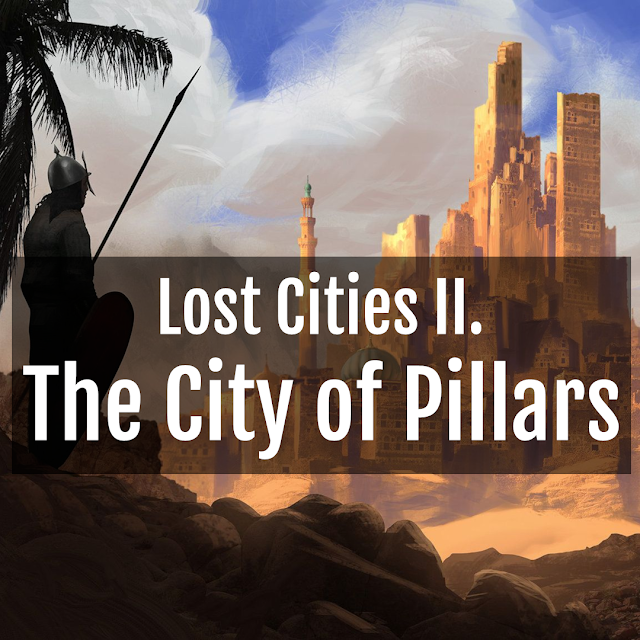
  Lost worlds and lost citirs are infinite sources for our blog and a great source of inspiration for writers. There are famous ones like El Dorado that we covered in our previous post (you can read it here ( link )) or Troy from Illiad but today I like to introduce a lesser known one, known as the “Atlantis of the Sands”: the city of Iram. The idea for this post came from a very interesting Youtube video, and since our own work features something similar, I thought it’d make an excellent topic for today. I. The City of Pillars Iram appears in the folklore of pre-Islamic arabia but is also mentioned in the Quran as Iram of the Pillars, because the city was known from its huge pillars and towers. They were so big, that they thought the city was build by giants, or another race technologically more advanced than humans were at that times. Once source called the people of ʿĀd, other tales claim they were actually djinns, or even nephilims, giant hybrids of humans and angels. (Note tha...